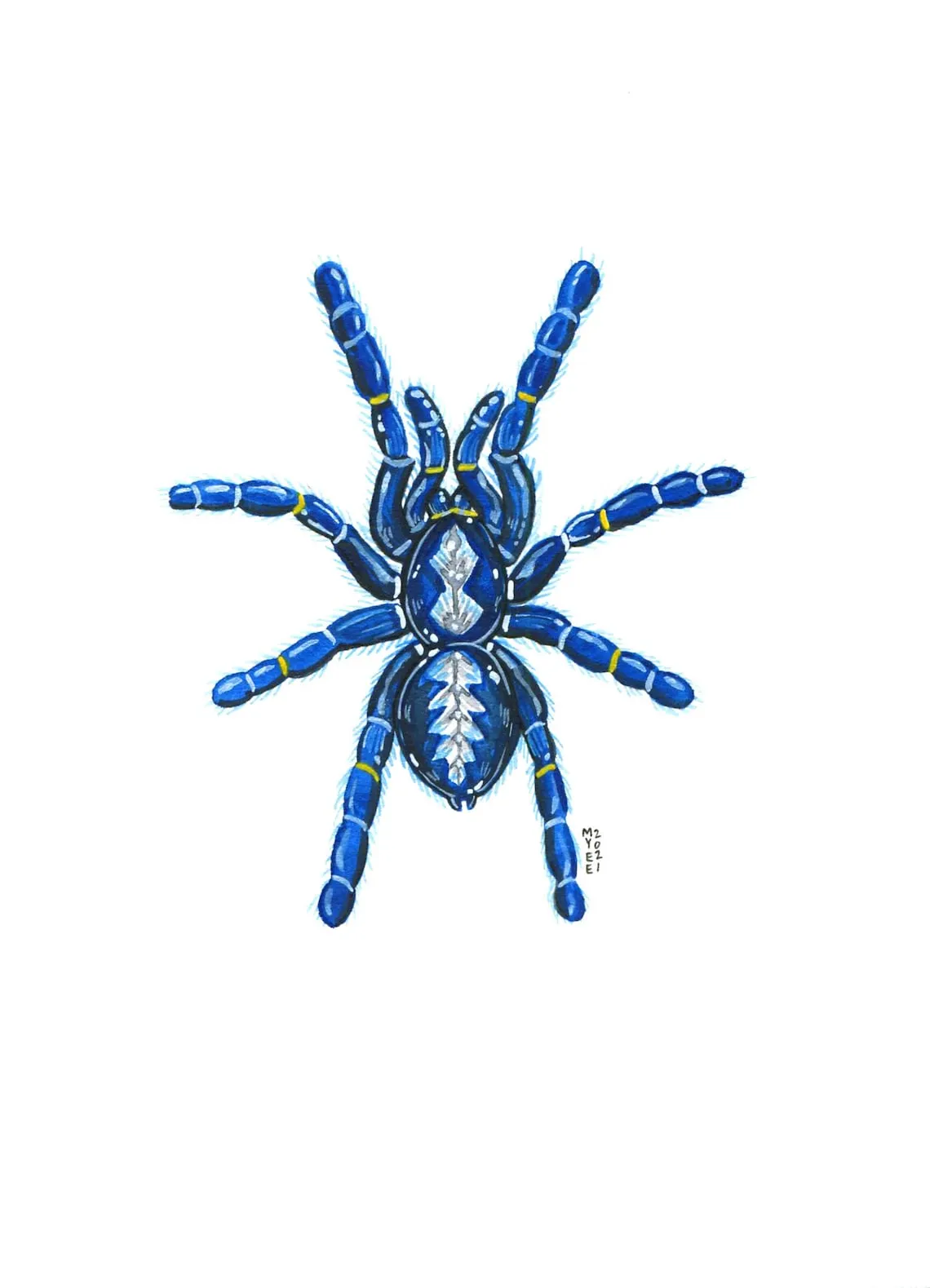
Understanding the Gooty Sapphire Tarantula (GST)
The Gooty Sapphire Tarantula (Poecilotheria metallica), often abbreviated as GST, is a captivating arboreal tarantula species native to the forests of Andhra Pradesh, India. Known for its striking metallic blue and black coloration, the GST has become a popular choice among tarantula enthusiasts. These spiders, especially in their sling (juvenile) stage, require specific care to thrive, and understanding their unique needs is crucial for their well-being. Proper care ensures a long and healthy life for these beautiful creatures. Proper knowledge of their habitat and behavior is paramount to their care, and understanding of their requirements is the first step.
Origin and Characteristics of GST Slings
GSTs are native to a specific region of India, and their care requirements are tied to their natural habitat. In the wild, they dwell in tree hollows and crevices, which influences the enclosure and environmental conditions you should provide. Slings are particularly vulnerable, and the care you give at this stage will largely determine its future. They start small, with a leg span of around an inch or less, but they grow rapidly with proper care and feeding. The slings’ initial appearance and coloring will mature over time, developing the iconic metallic blue that gives them their common name. It’s important to note the differences between adults and slings as their care might vary slightly.
Appearance and Behavior

GST slings are known for their vibrant colors even at a young age. Their appearance is a key factor in their popularity among hobbyists. Their behaviors include their arboreal nature, being more active and prone to fast movements, and being a defensive species. Therefore, it is very important to observe the behavior of your sling, and understand their natural instincts. Slings are more fragile than adults, and careful monitoring is a must. They are also prone to hiding, especially when they are new to their enclosure. Providing ample hiding spaces and observing their behavior are essential to proper care.
Top 5 Care Tips for Gooty Sapphire Tarantula Slings
Caring for a GST sling can be a rewarding experience. Here are five key tips that every GST sling owner should know to ensure the well-being of their pet. Following these simple guidelines can make all the difference in your sling’s development and overall health. These tips will cover all aspects of care, from enclosure setup to feeding and safety. Implementing these suggestions will help you to provide a suitable and enriching environment for your Gooty Sapphire Tarantula sling.
Choosing the Right Enclosure
The right enclosure is fundamental to your GST sling’s health. Since they are arboreal, it should be taller than it is wide. For slings, a small, secure enclosure is best. A clear, well-ventilated enclosure allows for easy observation and monitoring. The size should accommodate their growth; as they grow, they will need to be upgraded to larger enclosures. A secure lid is essential to prevent escapes, as GSTs are fast and can be unpredictable. Ensure the enclosure is escape-proof and appropriate for its size. A well-chosen enclosure is the foundation of good GST sling care.
Enclosure Size and Setup

The enclosure should be appropriate for the size of your sling. Start small, and upgrade as they grow. The setup should mimic their natural habitat as much as possible. This includes the substrate, decor, and environmental conditions. A small deli cup with ventilation holes is suitable for very small slings. As they grow, you can upgrade to a larger, appropriately sized arboreal enclosure. The setup must include a hide and other decor to provide security and enrichment. The enclosure should be well-ventilated to prevent mold and maintain air quality.
Substrate and Decor
The substrate should hold humidity but also allow for proper ventilation. Suitable substrate options include a mix of coco fiber, peat moss, and vermiculite. This combination helps to maintain humidity while preventing mold. Decor should include a hide, such as a piece of cork bark or a hollow log, to provide a secure retreat for your sling. Live or artificial plants can also add to the aesthetic and provide additional hiding spots. Arrange the decor in a way that allows the sling to move freely and feel secure. Ensure all decor is clean and safe, and does not pose a hazard to the sling. Proper substrate and decor create a balanced habitat.
Maintaining Optimal Humidity and Temperature
Proper humidity and temperature are crucial for the health and well-being of your GST sling. These factors directly influence the sling’s ability to molt properly and remain active. Both of these environmental factors need regular monitoring. Maintaining the correct environment is as essential as providing food and water. The correct humidity and temperature levels mimic their natural environment, which helps them stay healthy and active.
Humidity Levels and Monitoring

GST slings require a moderate to high humidity level. Aim for 65-75%. You can maintain humidity by misting the enclosure regularly, typically a couple of times a week. The frequency depends on the ventilation in your enclosure and the ambient humidity. Use a hygrometer to monitor the humidity levels accurately. Avoid over-misting, as this can lead to mold growth. Ensure the substrate is slightly moist but not waterlogged. Regular monitoring and adjustment is the key to maintaining a suitable humidity level for your GST sling.
Temperature Requirements
GST slings thrive in a temperature range of 75-85°F (24-29°C). Maintaining this temperature range is important for their metabolism, molting, and overall activity level. Use a thermometer to monitor the temperature in the enclosure. Supplemental heating may be necessary, especially during colder months. A small heat mat placed on the side of the enclosure, or above, is an effective way to provide gentle heat. Be careful not to overheat the enclosure, as this can be harmful. Ensure the heat source is properly regulated and does not pose a fire hazard.
Feeding Your Gooty Sapphire Tarantula Sling
Providing appropriate food and establishing a feeding schedule is critical for the growth and development of your GST sling. Slings have higher metabolic rates and therefore need more frequent feedings. Observe the feeding behavior and adjust accordingly. Overfeeding should be avoided to prevent obesity and health problems. Regular feeding with the correct types of food is essential for their wellbeing.
Appropriate Food Choices

GST slings eat a variety of small insects. The most common food choices include pinhead crickets, flightless fruit flies, and small roaches. The size of the prey should be proportionate to the size of the sling. As a general rule, the prey should be no larger than the sling’s carapace. It’s important to provide a varied diet to ensure they receive all the necessary nutrients. Feed appropriately sized crickets and other insects dusted with calcium and vitamin supplements. Make sure all food is free of pesticides or contaminants.
Feeding Frequency
Young GST slings should be fed two to three times per week. This frequency will support their rapid growth. Monitor the sling’s abdomen to gauge if they are getting enough food. A well-fed sling will have a plump abdomen. Adjust the feeding schedule based on their appetite and growth rate. Remove any uneaten prey within 24 hours to prevent them from stressing the sling. Reduce feeding frequency as the sling grows and matures. Regular observation will help you find the best feeding routine.
Watering and Hydration
Providing fresh water is critical for hydration and overall health. Clean water should always be available to your GST sling. The method of providing water depends on the size of your sling. Ensuring proper hydration is a critical aspect of their overall well-being.
Water Source and Availability

For slings, a small, shallow water dish is recommended. Use a bottle cap or a similar shallow container. This prevents the sling from drowning. Always keep the water dish filled with fresh, clean water. Another method is to mist the enclosure. The droplets of water can be used by the sling to drink from. Replace the water regularly, ideally every other day, to prevent bacterial growth. Proper hydration is essential for molting, growth, and overall health.
Preventing Dehydration
Dehydration can be fatal for GST slings. Monitor the sling for signs of dehydration, such as a shrunken abdomen or lethargy. Ensure the enclosure has appropriate humidity levels, as detailed above. Misting the enclosure can also help to prevent dehydration. If you suspect your sling is dehydrated, increase the frequency of misting, and ensure the water dish is always full. Always provide a readily available water source to prevent dehydration.
Handling and Safety Precautions
GSTs are fast and can be defensive, so handling should be kept to a minimum. While some hobbyists choose to handle their tarantulas, it is not necessary for their well-being. The potential for bites and falls exists when handling. It’s important to prioritize the safety of both the keeper and the spider. When interacting with the tarantula, follow safety guidelines. Be aware of your tarantula’s temperament and avoid stressful situations.
Safe Handling Techniques

If handling is necessary (e.g., for enclosure cleaning), do so with extreme caution. Handle the spider over a soft surface, such as a bed or a carpet, to minimize the risk of injury if it falls. Use a soft brush to gently guide the spider if needed. Avoid sudden movements, and keep your hands steady. Be calm, and speak softly to reduce stress. It’s better to avoid handling when possible. Always be mindful of the spider’s behavior and body language. If the spider shows signs of aggression, such as raising its front legs or flicking hairs, do not attempt to handle it.
Recognizing Signs of Stress
Knowing how to spot signs of stress is very important. These signs can vary depending on the individual spider and its environment. Common signs include refusing food, hiding excessively, flicking hairs, or a change in behavior. If you notice these signs, re-evaluate the environmental conditions in the enclosure. Check the temperature, humidity, and substrate. Make sure the spider has access to water and is not being disturbed. Sometimes, a stressed spider simply needs to be left alone. Address any potential stressors and give the spider time to recover. If the behavior persists, consider consulting with an experienced tarantula keeper.
Conclusion
Caring for a Gooty Sapphire Tarantula sling can be a rewarding experience. By following these tips, you can provide a safe, healthy, and enriching environment for your spider. Remember to research, observe, and adapt your care based on your sling’s individual needs. Understanding the specific needs of GST slings, from the enclosure setup to feeding and safety, is the key to their survival and well-being. With the right care, you can enjoy the beauty and unique characteristics of your Gooty Sapphire Tarantula for many years to come. Always prioritize the well-being and safety of the spider. With the right dedication and knowledge, you can become a successful GST sling keeper.