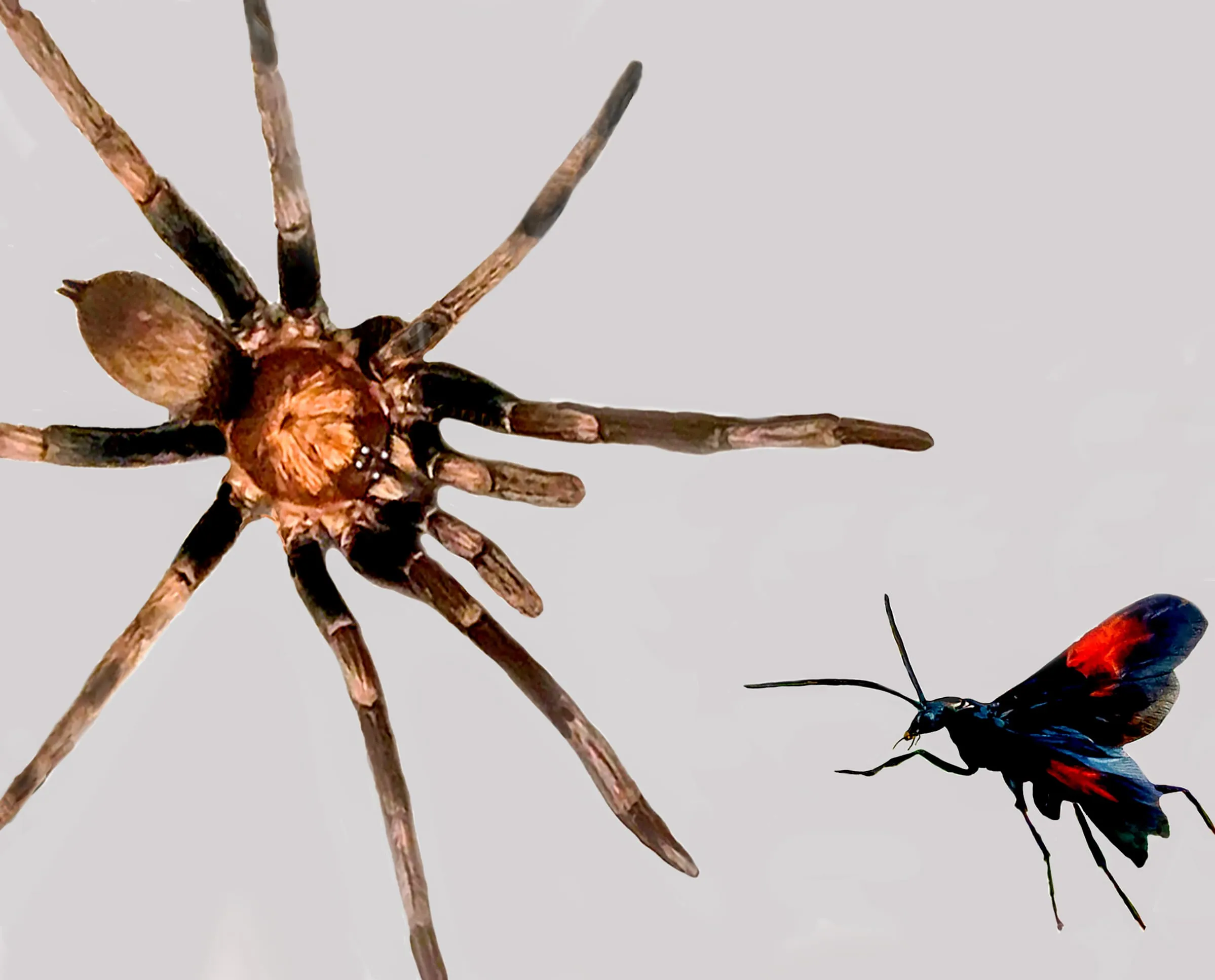
Tarantula Hawk Wasp vs Spider Overview
The clash between the tarantula hawk wasp and the spider is a dramatic, often brutal, dance of predator and prey, playing out in the arid landscapes of the Americas, and other warm regions around the world. This battle isn’t just a simple hunt; it’s a complex interplay of instinct, strategy, and sheer survival. The tarantula hawk wasp, a formidable insect known for its imposing size and excruciating sting, seeks out the formidable tarantula spider, not for a quick meal, but to use it as a living incubator for its offspring. The spider, with its arsenal of venom, webs, and defensive postures, fights for its life against an opponent that is specifically evolved to overcome these defenses. This article dives into the fascinating world of these creatures, exploring their characteristics, behaviors, and the dramatic encounter that defines their relationship.
What is a Tarantula Hawk Wasp?
The tarantula hawk wasp (Pepsis grossa) is a species of large wasp belonging to the family Pompilidae. These wasps are among the largest in the world, with females often reaching up to 5 cm (2 inches) in length, and males being slightly smaller. Their bodies are characterized by a striking appearance a vibrant combination of a black or dark blue body and reddish-orange wings. This bold coloration serves as a warning, signaling their potent sting. These wasps are solitary insects, known for their remarkable hunting behavior, specifically targeting tarantula spiders. Their existence is a testament to the diverse and often brutal realities of the natural world, where adaptation and survival are constant challenges.
Tarantula Hawk Wasp Appearance and Characteristics

Tarantula hawk wasps are easily recognizable due to their impressive size and distinctive coloration. The females, particularly, are larger than the males, making them more formidable in the hunt. The body is a deep, often metallic, blue or black, providing a stark contrast to their fiery orange wings. The wings themselves are not just for show; they are strong and enable the wasp to swiftly navigate its environment, crucial for both hunting and evading threats. These wasps possess powerful legs, essential for manipulating their prey. Their anatomy is finely tuned for their predatory lifestyle, from the robust mandibles used for gripping and moving spiders to the venomous stinger that paralyzes their victims. Their antennae are also highly sensitive, helping them to detect prey and navigate their surroundings.
The Spider’s Role in the Wasp’s Life Cycle
The tarantula hawk wasp’s life cycle is inextricably linked to the tarantula spider. The female wasp seeks out a tarantula, which it paralyzes with a sting. The wasp then drags the paralyzed spider to a burrow or another safe location, where it lays a single egg on the spider’s abdomen. The wasp larva hatches and begins to feed on the spider, initially consuming non-vital organs to keep the host alive as long as possible. As the larva grows, it devours the spider entirely, eventually pupating within the spider’s body. Finally, the adult wasp emerges, ready to repeat the cycle. This process is a remarkable example of parasitoidism, where one organism lives at the expense of another, ultimately leading to its death. The spider, therefore, is not just prey; it is a vital incubator for the next generation of wasps.
How the Tarantula Hawk Wasp Hunts
The hunt is a captivating display of strategy and tenacity. The wasp actively seeks out tarantulas, using its keen senses to locate them. Once a spider is found, the wasp approaches cautiously, often engaging in a tense dance of assessment and posturing. The wasp must avoid the spider’s fangs and defenses. The wasp typically stings the spider in a vulnerable spot, such as the underside of the abdomen, to paralyze it. The sting is extraordinarily painful, considered one of the most painful insect stings in the world. The wasp then uses its strong mandibles and legs to drag the paralyzed spider to a pre-selected burrow or safe place. This journey can be long and arduous, sometimes involving the wasp navigating difficult terrain. The wasp’s success depends on its ability to overcome the spider’s defenses, its strength, and its persistence.
The Sting and Its Effects

The tarantula hawk wasp’s sting is notorious for its intense pain, often described as excruciating and debilitating. This is not just a defensive mechanism, it is a tool designed to subdue the spider, the pain itself incapacitates the spider. The venom contains neurotoxins that paralyze the spider, rendering it immobile but alive. The pain is so intense that it can temporarily paralyze a human, causing them to lose all ability to function, and it can last for several minutes, but fortunately, the effects are not usually long-lasting. While the sting is extremely painful, it is not generally life-threatening to humans, although allergic reactions are possible. The purpose of the sting is not to kill the spider immediately, but to immobilize it, allowing the wasp to use it as a host for its larvae.
Tarantula Hawk Wasp Behavior and Habitat
Tarantula hawk wasps are typically found in warm, arid regions, including the southwestern United States, where tarantulas are common. They are solitary insects, with the females primarily focused on hunting and reproduction, while the males concentrate on finding mates. These wasps are active during the day, when they hunt for spiders and search for nectar to feed on. They have specific behaviors associated with each stage of their life cycle, from hunting and stinging to egg-laying and caring for their offspring. They are also known for their resilience, able to survive in harsh environments. The study of their behavior reveals intricate strategies for survival and reproduction, demonstrating the complexity of insect life.
The Spider’s Defense Mechanisms
Tarantulas have a range of defense mechanisms to protect themselves from predators, including the tarantula hawk wasp. One of the primary defenses is their venomous fangs, which can deliver a painful bite. They also have urticating hairs on their abdomen, which they can flick at attackers, causing irritation and deterring them. Some tarantulas also adopt a defensive posture, rearing up on their hind legs and displaying their fangs, to appear more threatening. Moreover, they are capable of rapid movements, trying to escape danger. Their primary defense is not usually combat, but avoidance. They rely on their speed, their ability to hide in burrows, and their generally aggressive demeanor to keep away potential predators. However, these defenses are often insufficient against the tarantula hawk wasp, which has evolved specific strategies to overcome them.
Tarantula Hawk Wasp vs Spider Size and Strength

Size and strength play critical roles in this predator-prey dynamic. Although the female tarantula hawk wasp can be up to 5cm in length, and the tarantulas can be larger, the wasp is still relatively small compared to its prey. However, the wasp compensates for its size disadvantage with its potent sting, specialized hunting techniques, and superior agility. The spider, on the other hand, possesses a more robust physique, powerful fangs, and a formidable arsenal of venom. Despite the spider’s size and strength, the wasp has evolved specific strategies to overcome these defenses. The wasp’s success relies on its specialized hunting techniques, including its precision sting and ability to manipulate the spider. The balance of power shifts with each encounter, showcasing nature’s ongoing evolutionary arms race.
Interesting Facts about Tarantula Hawk Wasps
Here are some interesting facts about tarantula hawk wasps to further appreciate these fascinating creatures
The sting is among the most painful They use the spider as a food source for their young They are solitary creatures They have vibrant colors as a warning They are beneficial for the environment The wasp is the official state insect of New Mexico The wasp can fly up to 25 mph The wasp paralyzes the spider The wasp is a fearless predator They use strong mandibles to transport spiders